


Cohort Course Pricing Guide: One-Time Payment vs Subscription Models
 By Julieta Gil
TL;DR: One-time payments deliver immediate cash flow for growth. Subscriptions build predictable MRR and higher lifetime value. For cohort courses, a hybrid model works best: charge a premium one-time fee for the live experience, then offer a lower-tier subscription for continued access to community and content. Creators who use push notifications on branded apps see 3–10× higher retention, stabilizing subscription revenue. To maximize margin, route high-ticket cohort sales ($500+) through web checkout (lower fees) and low-friction mobile subscriptions through in-app purchases.
If you run live group programs, the feast-or-famine cycle is exhausting. You launch, you hustle, you fill seats, you deliver. Then it ends. Next month starts at zero. Your students got results, but they disappeared. Your revenue chart looks like a mountain range.
The root problem is not your program quality. It is your pricing model. Choosing between one-time payments and subscriptions determines whether you start every month at zero revenue or wake up to cash already in your account. Here is how to price cohort courses to own your revenue, not rent it.
What Is a Cohort-Based Course?
You run a cohort-based course when you enroll a group of students who progress together through your content with fixed start and end dates. Unlike self-paced courses, cohorts include real-time interaction, live sessions, group activities, and peer discussions guided by expert instructors.
This structure creates accountability, community, and higher completion rates. Your students pay you for transformation, not just content. Because of the live delivery and personalized coaching involved, cohort courses typically command $500 to $5,000+ in tuition, significantly more than self-paced alternatives.
The challenge is deciding how to collect that tuition. Do you charge everything upfront, or spread it across recurring payments? Each path shapes your cash flow, workload, and business valuation. To choose the right path, you need to understand how the two models compare in practice.
Key terms for group program pricing
- Cohort course: A structured group learning program with live interaction, fixed timelines, and community-based accountability.
- Value-based pricing: A strategy that sets prices based on perceived value and outcomes rather than cost of production or competitor pricing.
- MRR (Monthly Recurring Revenue): The recurring revenue a business generates each month, providing predictable cash flow and stability critical for growth.
- Churn: The percentage of customers who cancel subscriptions over a period, typically measured monthly or annually.
- LTV (Lifetime Value): The total worth of a customer over the entire duration of their relationship with your business, calculated by multiplying average revenue per user by average customer lifespan.
One-Time Payment vs. Subscription Models: A Detailed Comparison
The choice between one-time and subscription pricing determines your revenue stability, operational rhythm, and business value.
Side-by-Side Comparison
| Criteria | One-Time Payment | Subscription Model |
|---|---|---|
| Cash Flow | Large upfront spikes, unpredictable month-to-month | Steady recurring revenue that is more predictable and stable |
| Admin Load | You hustle intensely during launch periods, then have quiet weeks between cohorts | You must deliver ongoing engagement and new value every month |
| Retention Focus | Heavy emphasis on new customer acquisition | Retention and engagement are essential, churn impacts current and future revenue |
| LTV Potential | Capped at single purchase price | Uncapped, LTV reflects long-term value and informs acquisition spending |
One-Time Payment Strengths and Weaknesses
One-time pricing delivers immediate capital. You can reinvest cash into ads, hire support, or upgrade tools. The buyer psychology is simpler: pay once, own forever. For creators just starting, this model funds operations without waiting for recurring charges to compound.
The downside is brutal. Every month starts at zero revenue. You must constantly fill the top of the funnel. Recurring revenue delivers more predictable and stable cash flow than one-time sales, but one-time models force you to rely on launch intensity and acquisition volume alone.
Subscription Model Strengths and Weaknesses
Subscriptions build the recurring revenue engine that allows you to stop trading time for dollars. Subscription-based models generate an average of $94,731 in annual income across creators, the highest of any monetization strategy. Predictable MRR lets you plan hiring, invest in content, and scale without panic.
The trade-off is ongoing performance pressure. You must deliver continuous value or face churn. Education subscriptions average 9.6% monthly churn, meaning retention and engagement become operational priorities. Even slight fluctuations in churn can make a significant impact on your current and future recurring revenue.
The Hybrid Strategy for Cohort Courses
Most successful cohort creators use a tiered hybrid model:
- Charge a premium one-time fee for the live cohort experience: Live calls, group coaching, premium resources, and direct access during the program timeline.
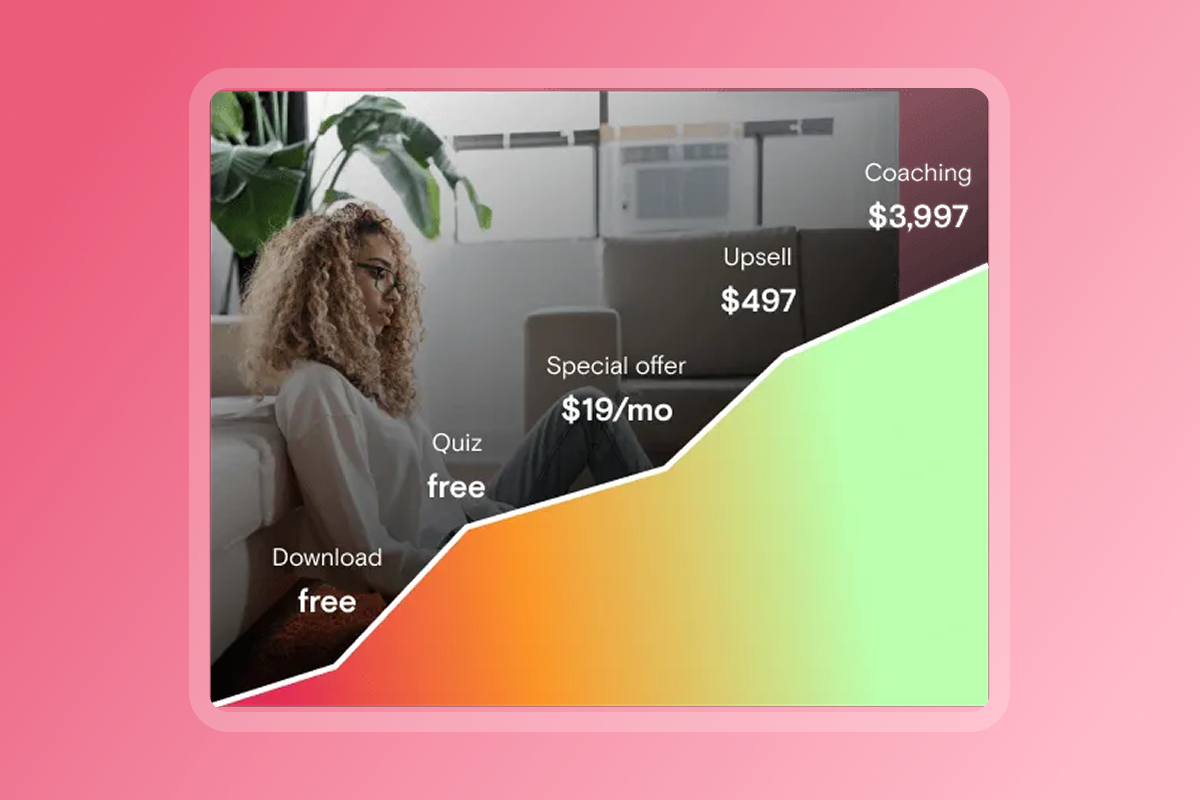
- Offer a lower-priced subscription for alumni: Continued access to your app, community, and updated content after the cohort ends.
For example, charge $1,997 one-time for a 6-week live cohort, then offer a $49/month alumni community subscription. This model captures immediate cash while building a recurring revenue base that stabilizes between cohort launches. We detail how to structure pricing plans and paywalls in our help documentation.
How to Price a Cohort Course: A Value-Based Framework
Pricing by hours of content or competitor averages leaves money on the table. Value-based pricing adjusts price based on perceived value and outcomes rather than production cost. Use this four-step framework to calculate what your cohort is worth.
1. Quantify the Outcome Your Cohort Delivers
Do not price by video length. Price by the transformation. If your business coaching cohort helps clients land their first $10,000 contract, the value is $10,000+. If your fitness program helps clients lose 20 pounds and gain confidence, the value is life-changing.
Ask: what specific, measurable result does your cohort produce? What does that result enable in their life or business? Price a meaningful fraction of that value. Cohort courses commonly range from $500 to $5,000+ because students pay for transformation, not content hours.
2. Analyze Competitor Positioning
Research what similar cohort programs charge in your niche. Do not race to the bottom. Look at mid-tier and premium programs. Programs like Ali Abdaal's Part-Time YouTuber Accelerator charge $4,995 per enrollment and generate over $1.5 million in nine months by focusing on outcomes.
Position your pricing relative to your unique angle. If you offer more live access, personalized feedback, or a branded app experience, charge accordingly.
3. Calculate Operational Costs and Time Investment
Factor in your time (live calls, feedback, content creation), team costs (support, community moderation), software subscriptions, and advertising spend. If you invest 40 hours into a cohort and your target hourly rate is $200, your baseline is $8,000. Divide by cohort size to find per-student cost.
For example, if you run 12 sessions at $150/hour and include 6 hours of coaching calls, you invest $2,700 in time per client. With 15 participants in your group program, you can charge $1,500 per client and generate $22,500 from one cohort while covering costs and margin.
4. Add the Premium for Live and Community Access
Cohort-based courses command a premium over self-paced because of the live interaction and accountability. Cohorts typically see a 30-40% price increase compared to self-paced equivalents due to live workshops, group projects, and personalized coaching.
Most self-paced courses are priced between $50 and $200, while cohort-based programs range from $500 to $2,000+. High-touch coaching programs can exceed $3,000. Use this premium multiplier to justify your pricing when students question cost. You can also reference our LTV, CAC, and payback metric guide to understand long-term profitability.
Pricing Formula to Apply
Here is a simple formula: (Tangible Value + Intangible Confidence) - Friction = Price Ceiling.
Tangible Value is the measurable outcome (revenue, weight loss, skill certification). Intangible Confidence is the emotional result (feeling capable, community belonging, status). Friction is the barriers to success (time commitment, tech complexity, unclear results). Your price ceiling is where perceived value exceeds friction.
The Impact of Platform Fees on Your Margin
Your price is not your profit. Platform fees will eat your margin if you ignore them. Choosing the right payment method for your cohort course can shift your take-home by 10-25%.
Web Checkout Fees: PassionPayments
When students purchase through your web app, PassionPayments charges a 3.9% platform fee plus Stripe's standard processing fees (approximately 2.9% + $0.30 per transaction, as of January 2026). Total estimated fees are around 6.8% + $0.30 per transaction.
For a $1,000 cohort enrollment, you pay roughly $68.30 in fees and keep $931.70. This is your best option for high-ticket one-time payments. The web checkout flow allows you to control the buyer experience, send them to a branded purchase page, and avoid the higher commission of mobile app stores.
Mobile In-App Purchase Fees: Apple and Google
When students purchase inside your iOS or Android app, Apple and Google take a commission. The standard rate is 30% for most developers, but small business programs reduce this.
Apple's App Store Small Business Program offers a 15% commission if you earned less than $1 million in proceeds the previous calendar year. Google Play charges 15% on the first $1 million in annual revenue, then 30% beyond that threshold. For subscription services specifically, Google takes a 15% commission regardless of revenue tier.
For a $1,000 cohort purchase via IAP at 15%, you pay $150 in commission and keep $850. For a $49/month subscription via IAP at 15%, you pay $7.35 per month and keep $41.65.
Strategic Fee Decisions for Cohort Pricing
Use web checkout (PassionPayments) for high-ticket cohort enrollments ($500+). The 6.8% fee preserves margin on large purchases. Use in-app purchases (IAP) for low-ticket monthly subscriptions ($29-$99) where the friction reduction of mobile payment (FaceID, stored credentials) increases conversion enough to offset the higher commission.
A hybrid approach works well: sell the live cohort via web checkout to maximize margin, then offer an alumni subscription via IAP for convenience. Students who want ongoing access after the cohort ends can subscribe in-app without leaving your branded experience. Our pricing plan management guide walks through setting up multiple payment methods.
Common Pricing Mistakes to Avoid
Even experienced creators make predictable pricing errors that cap revenue or increase churn.
Underpricing Based on Content Length Instead of Outcomes
Pricing by hours of video or number of lessons ignores the value you deliver. A 3-hour cohort workshop that helps a client land a $15,000 contract is worth far more than a 30-hour self-paced course that produces no tangible result.
People understand they pay a premium for cohort access because of the live interaction and time investment from the instructor. You can justify higher prices by showcasing the difference between your cohort and hiring you for 1-1 coaching, which would cost even more.
Ignoring Churn and Engagement in Subscription Pricing
If you charge high subscription prices without engagement infrastructure, you will face refund requests and cancellations. A healthy churn rate for subscriptions is under 5% monthly, and below 3% is ideal for scaling.
If you price a cohort alumni community at $99/month but provide no new content, no live events, and no active community moderation, churn will exceed 10%. Price subscriptions in proportion to the ongoing value you can sustainably deliver. Many creators find $29-$49/month is the sweet spot for alumni access.
Setting Prices Once and Never Testing Elasticity
Your first pricing guess is rarely optimal. Test different price points across cohorts. Try $497, $997, and $1,497 for similar programs and measure conversion, completion, and satisfaction. Higher prices often attract more committed students who finish and refer others. Once you find your pricing ceiling, you can invest in growth with confidence.
Overcomplicating Pricing Tiers
Offering five or six pricing tiers confuses buyers and creates decision paralysis. Keep it to 2-3 options: a core cohort tier, an alumni subscription tier, and optionally a VIP tier with 1-1 coaching add-ons.
Simplicity increases conversion. We show you how to hide certain pricing plans for invite-only or grandfathered users while keeping your public pricing clean.
How a Branded App Supports Higher Pricing and Retention
A branded mobile app signals premium positioning and creates the engagement habits that sustain subscriptions.
Value Perception and Brand Control
A Facebook Group or unlisted YouTube playlist feels generic. A branded app with your name, logo, colors, and custom onboarding feels professional. Students perceive higher value and are willing to pay premium prices when the experience is polished and owned.
Creators in health and fitness use branded apps to deliver workout programs, nutrition guides, and accountability communities. This branded experience justifies premium subscription pricing because it feels like a dedicated platform, not a side project.
Push Notifications Drive Retention and Reduce Churn
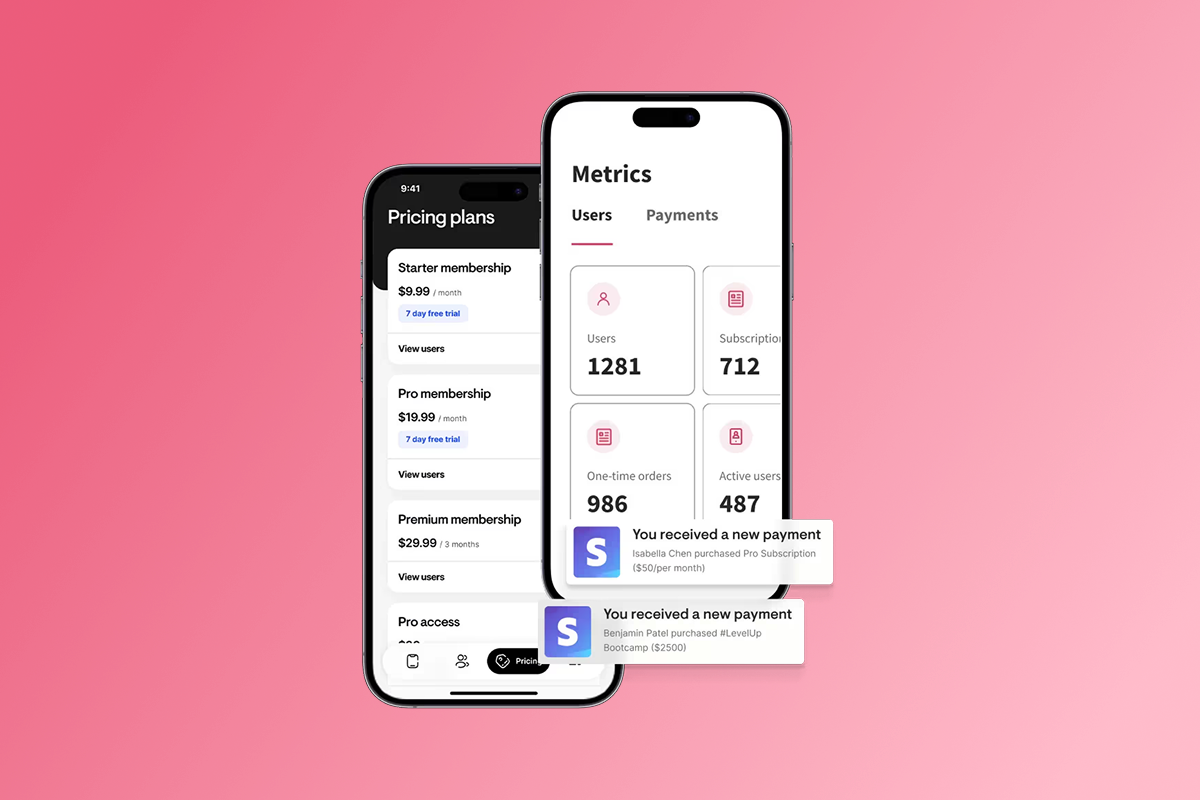
Email open rates across industries average 42.35% as of 2025, but push notifications offer higher engagement. Sending push notifications can increase app retention rates by 3-10x, and retention rates are nearly 3x higher when users receive push in their first 90 days.
For subscription revenue, retention is everything. Push notifications let you remind students about live sessions, celebrate milestone completions, and share new content without waiting for them to check email. This ongoing touchpoint reduces churn and increases lifetime value. Our interactive course features include push scheduling, drip content, and offline access to keep students engaged.
In-App Communities and Offline Access
When your community lives inside your branded app alongside your content, students have one place to go. No juggling Facebook, Slack, a course platform, and a separate payment site. Tool consolidation improves engagement and reduces support questions.
Students can download lessons for offline access, letting them learn on planes, during commutes, or in areas with poor connectivity. This convenience increases completion rates and perceived value, justifying higher subscription prices. Students who are active in community channels have higher completion rates and lower churn because they form relationships and accountability partnerships.
"Best Decision I Made Signing Up for Passion.io. I knew for my type of work an app would be the best way to serve my people... Incredible support, constant innovation, a step by step guide so you can follow the process, and the best FB community I have ever belonged to." - Lori on Trustpilot
Frequently Asked Questions About Group Program Pricing
How much should I charge for a 6-month group coaching program?
Focus on the monthly value and total transformation you deliver. Programs typically range $2,000-$5,000 total, often split into installments like three payments of $900 each. Price toward the higher end if you include 1-1 coaching touchpoints or guarantee specific outcomes.
What is a good price for a live online course?
Live components justify 2-5x the price of self-paced courses. Cohort courses commonly range from $500 to $5,000+ for live experiences to account for operational complexity and real-time delivery.
Should I offer payment plans or require full payment upfront?
Payment plans increase conversion for high-ticket cohorts ($1,000+) but add administrative overhead and payment failure risk. Offer 3-6 month payment plans to reduce buyer friction, and incentivize full payment with a 10-15% discount to improve cash flow. For cohorts under $500, require full payment upfront to reduce administrative load.
How do I transition from one-time to subscription pricing without losing revenue?
Use a hybrid model: keep your one-time cohort pricing but add a subscription alumni tier. Existing one-time buyers can upgrade to the subscription for continued access, creating recurring revenue without cannibalizing launches.
Key Terms Glossary
Cohort-based course: A structured group learning program where students enroll together and progress through content with fixed start and end dates, live sessions, and peer interaction.
Value-based pricing: Setting prices based on the perceived outcome and transformation delivered to the customer rather than cost of production or competitor averages.
MRR (Monthly Recurring Revenue): The predictable revenue a subscription business generates each month, providing cash flow stability and enabling growth planning.
Churn rate: The percentage of subscribers who cancel over a specific period, typically measured monthly, indicating retention health and revenue sustainability.
LTV (Lifetime Value): The total revenue a customer generates over their entire relationship with your business, calculated by multiplying average revenue per user by average retention period.
Choosing between one-time and subscription pricing is choosing between volatility and stability. One-time fees fund growth. Subscriptions build equity. The smartest cohort creators use both: charge premium prices for live transformation, then offer recurring access to the community and content that keeps the transformation going.
The key to making subscriptions work is ownership. A branded app with push notifications, offline access, and in-app community creates the engagement that reduces churn. The subscription economy has grown 435% in the last decade, and creators who own their platform capture this growth instead of renting audience on social platforms.
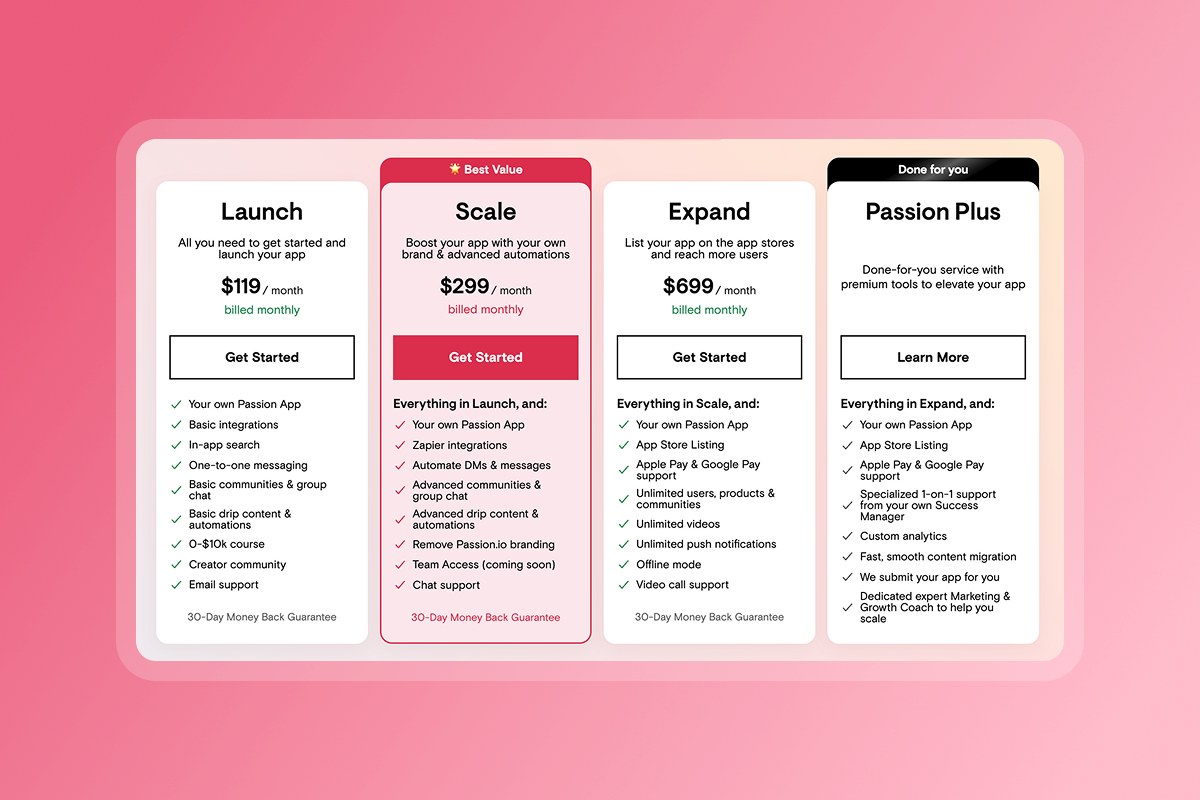
If you are ready to move from launch-to-launch hustle to predictable recurring revenue, start with pricing clarity. Calculate the value you deliver, choose the payment method that protects your margin, and build the engagement habits that sustain subscriptions. Book a demo to see how pricing plans, push notifications, and community features work inside a branded app, start on the Launch plan, or explore how creators are launching cohort programs in 4-8 weeks.

Build the business
behind what you know.
Turn your expertise into a branded app with courses, community, and the You AI Coach. Launch plan from $99/month.