


Patreon Alternatives 2026: Own Your Audience with a Branded App
Updated 08 January, 2026
You wake up to a notification. Patreon changed its fee structure again. Or worse, an algorithm update buried your posts. Two members can't access their exclusive content. Another asks why they can't get push notifications. You're building a business, but you don't own the foundation.
This pattern drives thousands of creators to look beyond Patreon every month. The platform may have served your needs as a starting point, but you need more than a membership page to scale a sustainable creator business. You need audience ownership, mobile-first engagement, and the flexibility to sell diverse digital products on your terms.
Why creators look beyond Patreon: The limitations of rented land
Patreon pioneered the creator membership model, but you'll hit clear constraints as your business grows. The platform works until it doesn't, and that breaking point arrives faster than most creators expect.
Algorithm risk and platform dependence
When you build on Patreon, you operate on what creators call "rented land." The platform controls your access to members, dictates feature rollouts, and can change policies without warning. Three key risks emerge:
- Platform dependency: Patreon controls your member list within their ecosystem. If the platform experiences downtime, policy changes, or closure, your direct access depends entirely on their systems.
- Limited communication: Members often hit walls when trying to build deeper engagement beyond basic content posting.
"There is no community platform for bidirectional communication" - G2 reviewer
- No mobile ownership: You can't send native push notifications. Members access content through Patreon's app, not yours. According to mobile commerce research, apps with push notification capabilities see 88% higher engagement rates than those without.
High fees and limited monetization control
Patreon's fee structure takes a cut before money reaches your account. The platform charges 5% to 12% platform fees depending on your plan tier, plus payment processing fees. For a creator earning $5,000 monthly on the Lite plan, that's $250 gone before deposits hit your account.
The bigger constraint is monetization flexibility. Patreon traditionally focused on recurring membership tiers. Although the platform recently added a "Shop" feature for one-time digital product sales, the integration remains less comprehensive than dedicated platforms built for diverse digital goods.
Scattered engagement and tool sprawl
Even with Patreon as your membership hub, you still juggle Instagram DMs for questions, Facebook groups for community, Zoom for live sessions, and separate tools for course delivery. This fragmentation creates support burden and weak engagement.
Patreon can't send native push notifications to member phones. You can't create offline-accessible content. The mobile experience exists entirely within Patreon's app, not yours. Mobile-first delivery significantly impacts how members consume content, with many creators seeing higher completion rates when members can access materials on their phones anywhere, anytime.
Understanding your needs: Choosing the right Patreon alternative
The best Patreon alternative depends on three core priorities: audience ownership, mobile-first engagement, and monetization flexibility. Before comparing platforms, rank these factors for your business model.
Prioritize audience ownership and control
The fundamental question: do you own your customer relationships and data? With Patreon, member information lives in their database under their terms. A true alternative should give you direct access to customer lists, payment history, and communication channels independent of any platform's policies.
When evaluating alternatives, ask three ownership questions:
- Can you export your full customer database and contact them independently?
- Can you send communications through channels you control (like push notifications to your app)?
- Can you maintain business operations if the platform relationship ends?
Seek mobile-first engagement features
Your audience lives on their phones. Mobile consumption dominates how people learn and engage with digital content, making mobile-first delivery critical for completion rates. Look for alternatives offering native mobile apps, not just mobile-responsive websites.
Specific features that drive engagement: push notifications for launches and reminders, offline content access for on-the-go consumption, and in-app community spaces native to the mobile experience. These directly correlate with member retention and lifetime value.
Evaluate monetization flexibility and fees
Platform fees directly impact your profit margins. Compare total cost of ownership across different models. Some platforms charge monthly subscriptions with lower transaction fees. Others take percentage cuts of every sale. Calculate your break-even based on current or projected monthly revenue.
Beyond fees, examine monetization options. Can you offer one-time purchases alongside subscriptions? Bundle products? Create freemium tiers with paid upgrades? The ability to mix subscription memberships with one-time digital product sales helps you capture more value from different customer segments.
Look for ease of use and launch speed
Custom app development typically costs tens of thousands of dollars and takes several months. No-code app builders changed this equation, but launch timelines still vary. Some platforms get you live on web in weeks while app store submissions happen in parallel. Others require extensive setup before launching.
Checklist: Find your ideal Patreon alternative
Before comparing specific platforms, score your priorities:
□ Can you export your full customer database and contact them independently?
□ Does the platform offer native iOS and Android apps with your branding?
□ Can members access content offline on their mobile devices?
□ Can you send push notifications directly without relying on email or social media?
□ Does the platform support multiple monetization models (subscriptions, one-time sales, bundles)?
□ Are transaction fees lower than your current platform when you calculate total cost?
□ Can you launch a web version in weeks, not months?
□ Does the platform provide training and support for building and selling your offerings?
Key Patreon alternatives compared: Beyond basic memberships
The creator economy offers numerous Patreon alternatives, each optimized for different use cases. Understanding their core strengths helps you choose the right fit.
Comparison: Patreon alternatives at a glance
Patreon: The baseline for comparison
Patreon remains the most recognized creator membership platform. Its advantages include brand recognition making users comfortable signing up, flexible posting options from podcasting to text to images, and a known path for creators just starting with simple membership needs.
The trade-offs center on platform control, limited mobile-first features, and a model built primarily around recurring memberships rather than diverse digital product sales. For creators seeking ownership and advanced features, limitations surface quickly.
Web-first alternatives
Three popular web-first alternatives serve specific creator needs but lack native branded mobile app creation:
- Ko-fi: Serves over 1 million creators as a donation and digital product platform with a free tier and optional Gold membership. Works well for simple shops and donations but remains web-first without native mobile capabilities for your brand.
- Substack: Excels for newsletter-based creators who write regularly, with 10% commission on paid subscriptions plus payment processing. Optimized for writers rather than coaches offering multimedia courses or community features.
- Ghost: Appeals to creators wanting control through an open-source publishing platform you can self-host or use via managed service. Supports memberships and newsletters with full data ownership but involves more technical complexity than no-code alternatives.
Video-centric platforms
Uscreen specializes in video content delivery with native apps for iOS, Android, Roku, and Apple TV. For video-first creators building Netflix-style subscription businesses, Uscreen provides robust tools. The focus on video means less flexibility for coaches offering courses with diverse content types like PDFs, audio, interactive elements, or community features.
The branded app advantage: Passion
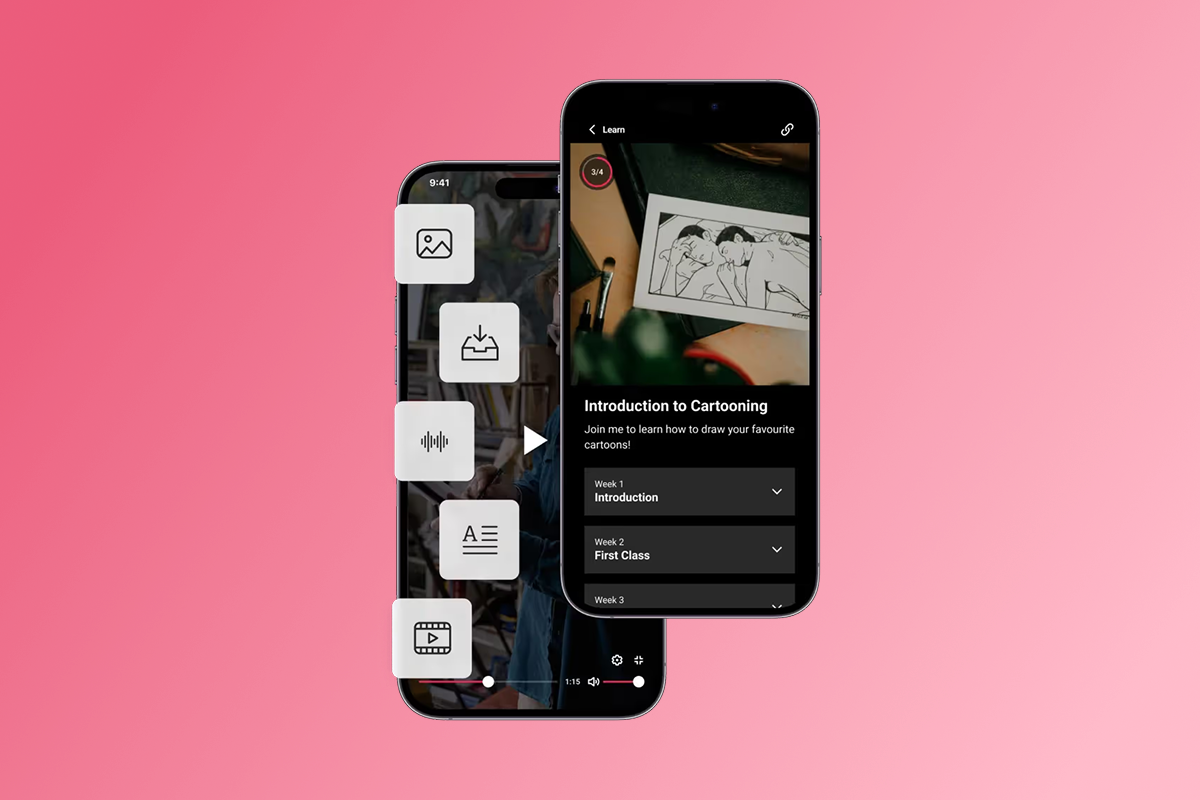
Passion takes a different approach: giving creators a complete branded mobile and web app that consolidates courses, community, and payments in one place. Unlike platforms where you operate within their environment, you launch an app with your name, logo, and brand on iOS, Android, and web.
The no-code builder lets you structure interactive courses, drip content, challenges, and quizzes without developers. In-app community features create engagement spaces you own, not borrowed from Facebook. Push notifications reach members directly on their phones, bypassing email and social algorithms.
"Passion.io helped me turn my vision into a fully branded app that inspires equestrian women daily. It's easy to use, incredibly supportive, and built for creators who actually care about changing lives." - Jenna Knudsen on Trustpilot
The platform specifically designed its features for creator businesses.
"What I love about Passion is that it's not just a platform to create your own app – it also provides invaluable training on how to build and sell your course. It's more than just the tech." - G2 review
Passion: Your branded app for diverse digital products
Moving from Patreon or starting fresh requires a platform that supports your complete business model, not just one monetization channel. Here's how Passion delivers that breadth.
Build your app: No-code creation for any digital product
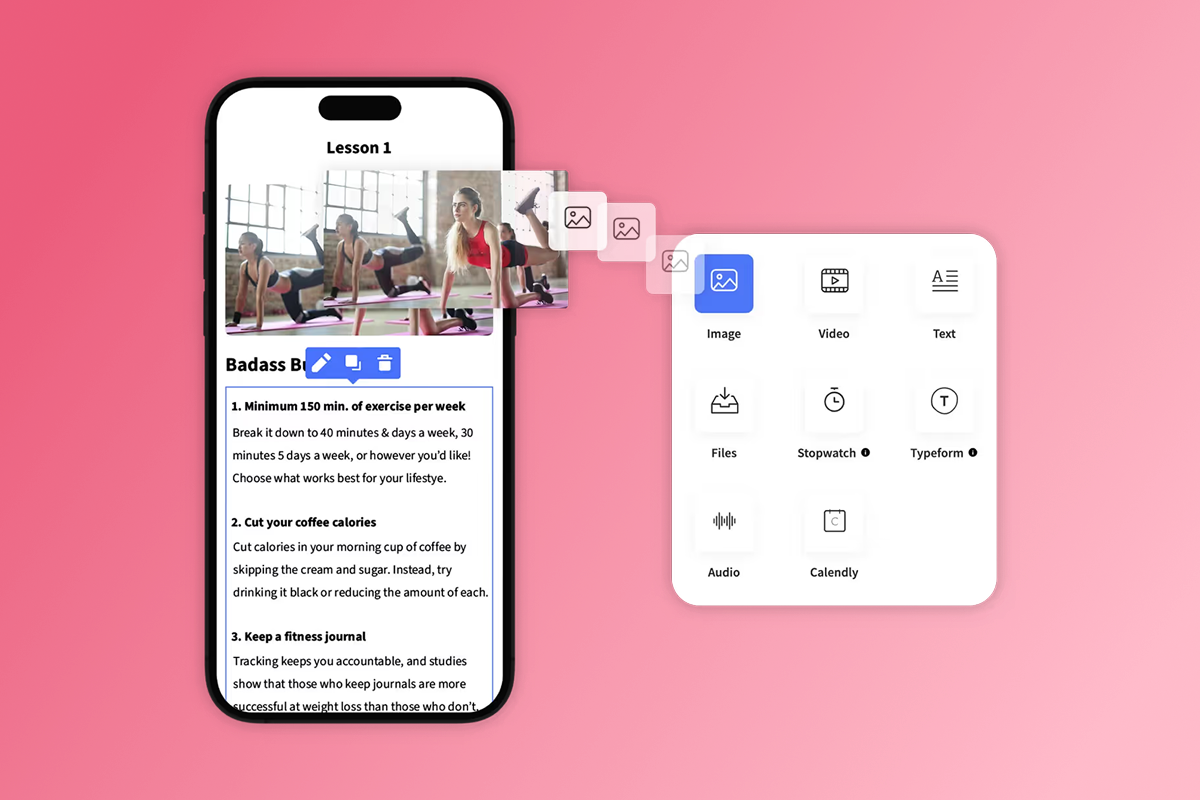
The drag-and-drop builder lets you create lessons with multiple content types:
- Upload video, audio, PDFs, and text within a unified interface
- Organize content into modules and design your app's look with your colors, fonts, and branding
- Add interactive elements like quizzes, progress tracking, and timers for challenges or workouts
- Set drip schedules to release content over time, increasing completion rates
- Enable offline download capabilities so members access content without internet connection
Members download content for offline access without needing streaming links they could share. This protects your intellectual property while improving user experience.
Monetize beyond subscriptions: Sell e-books, templates, and more

Monetization flexibility differentiates Passion from single-channel platforms:
- Set up weekly, monthly, or annual subscriptions for recurring revenue
- Offer one-time purchases for standalone digital products like e-books or template packs
- Create freemium access where some content is free and premium tiers unlock exclusive material
- Bundle multiple products together at discounts or run limited-time promotional pricing
For payment processing, you choose between PassionPayments for web checkouts (3.9% platform fee plus Stripe's processing) or in-app purchases through Apple and Google (15-30% fees). You can also route sales through external checkout methods with 0% Passion platform fees.
This flexibility matters. A $29 monthly subscription sold via web checkout costs you less in fees than the same subscription sold through Apple's in-app purchase system. Route higher-ticket items and bundles through web checkout while offering mobile convenience through in-app purchases for impulse buys.
Engage your audience: Push notifications and in-app community
Push notifications deliver messages directly to member devices with significantly higher visibility because they appear on lock screens and notification centers. Passion's push notification system lets you send launch announcements, lesson reminders, challenge checkpoints, and exclusive offers that actually reach your audience.
Schedule notification campaigns around your launch calendar. Send a push when someone hasn't logged in for a week. Remind members about live sessions or new content drops. This direct communication channel becomes a core retention lever you own.
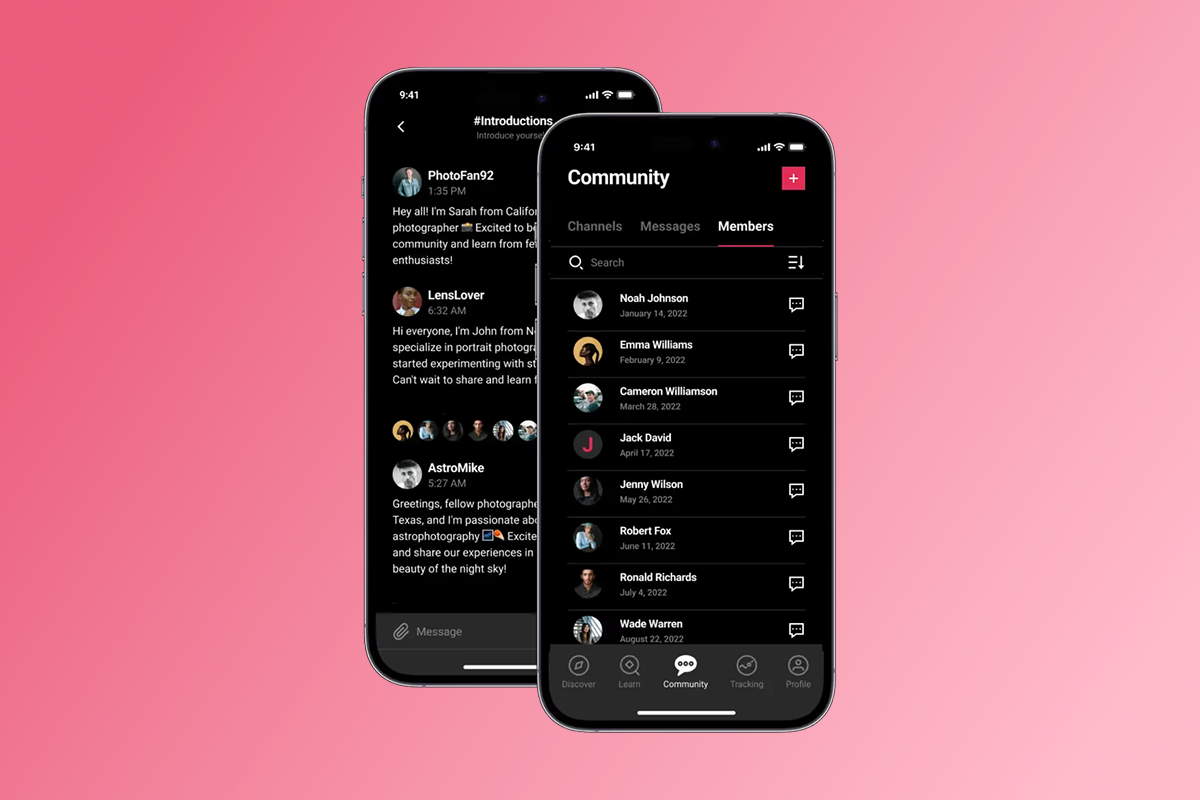
The in-app community creates a private space for members to connect, share progress, ask questions, and support each other. Unlike Facebook groups where algorithms control visibility and you risk losing access, your app community exists entirely within your branded environment.
Challenges and cohorts built into the platform help structure member experiences. Launch a 30-day challenge where members complete daily lessons, check in via community, and track progress. Research shows structured challenges increase completion rates by 15-30% compared to self-paced content alone.
Transparent fees and ownership: Keep more of your revenue

Platform economics directly impact your ability to build a sustainable business. Passion's pricing structure includes:
Monthly subscription plans:
- Launch: $119/month (or $99/month paid annually)
- Scale: $239/month annually
- Expand: $599/month annually
- Plus: Done-for-you build and launch support starting around $10,000-$20,000 depending on scope
Transaction fees:
- PassionPayments web checkout: 3.9% platform fee plus Stripe's processing fees
- External checkouts: 0% Passion platform fees (payment processor fees still apply)
- In-app purchases: Apple/Google retain 15-30% (Passion adds no additional fee)
Developer accounts:
- The Apple Developer Program costs $99 per year
- A Google Play Developer account requires a $25 one-time fee
Compare this to Patreon's model where the platform takes 5-12% of all earnings plus processing fees. For a creator earning $5,000 monthly on Patreon's Lite plan, that's $250 gone before the money hits your account. On Passion, your subscription fee stays fixed while you keep a higher percentage of each sale.
More importantly, you own the customer relationship and data. Export your full member list. Communicate through your app. If you ever want to migrate platforms, your audience knows your brand, not the platform you used to run your business.
How to launch your branded app and diversify revenue in 90 days
Breaking the transition into phases prevents overwhelm and creates clear milestones. Here's a realistic timeline based on how successful creators launch with Passion.
Phase 1: Content migration and app setup (Weeks 1-4)
Weeks 1-2: Foundation
- Audit your existing content and identify 10-15 core lessons, PDFs, or videos that deliver the most value
- Sign up for Passion and register Apple Developer ($99/year) and Google Developer ($25 one-time) accounts immediately, as verification takes time
- Upload your core content to the Passion builder and structure it into logical modules or courses
Weeks 3-4: Configuration and launch
- Add your branding (logo, colors, fonts) and customize your app's appearance
- Set up your first pricing offer, starting with either a monthly subscription or one-time purchase for your flagship digital product
- Configure payment methods: connect PassionPayments for web checkout and set up web vs. in-app purchase paths based on your fee strategy
- Create your onboarding flow so new members understand how to navigate your app and access content
- Publish your web app (typically goes live in days) and submit iOS/Android apps for review
Target: Web app live with core content, pricing set, native app submissions in progress.
Phase 2: Launch your first digital product (Weeks 5-8)
Weeks 5-6: Prepare your launch
- Plan your launch campaign: new digital product (e-book, template pack), convert existing Patreon members, or open a fresh offering
- Write your sales page copy within the app and record a welcome video explaining the value
- Set up your push notification launch sequence for launch day, day 3 check-in, and week 1 milestone
- Create your first in-app community channel where members can ask questions and share progress
Weeks 7-8: Execute and refine
- Launch to your existing audience (email list, social media, current Patreon members) and drive traffic to your web app
- Once native apps get approved (typically 1-2 weeks after submission), announce availability on iOS and Android
- Use push notifications to engage new members immediately after they join
- Gather feedback from your first cohort and use this input to refine content, add clarifying materials, or adjust pricing
- Monitor analytics within Passion to see engagement patterns and completion rates
Target: First 25-50 paying members, feedback collected, native apps live on app stores.
Phase 3: Drive engagement and scale (Weeks 9-12)
Weeks 9-10: Structured engagement
- Launch your first structured challenge or cohort within the app using the challenge framework to create time-bound engagement (like a 21-day program)
- Announce it via push notification to existing members and promote it for new signups
- Add your next digital product: if you started with a subscription, add a one-time purchase option; if you began with one-time sales, introduce a monthly membership tier
Weeks 11-12: Optimize and measure
- Double down on what's working: if push notifications drive engagement, increase frequency strategically; if community discussion creates stickiness, add weekly prompts or host live Q&A sessions
- Review your 90-day numbers: calculate total MRR (monthly recurring revenue), track completion rates, and measure retention
- Compare platform fees paid versus your old Patreon costs
- Survey members about their experience and ask for testimonials
Target: 75-100+ members, multiple monetization channels active, data-driven understanding of what drives retention in your app.
Own your future with a branded app
The creator economy rewards ownership. A branded app gives you what Patreon can't: your name on your members' phones, direct access through push notifications, multiple revenue streams from subscriptions to digital product sales, and a business built on owned assets.
Your content deserves better than a page on someone else's platform. Your members deserve a branded experience that reflects your quality. Your business deserves infrastructure you control.
Ready to own your audience and revenue?
Try Passion with a money-back guarantee (verify current trial terms at signup). Build your branded iOS, Android, and web app without code. Consolidate your courses, community, and payments into one place your audience will actually open.
Book a demo to see how creators in fitness, wellness, arts, and coaching launch in 4-8 weeks.
Frequently asked questions
What are the best Patreon alternatives for artists and writers?
For visual artists, Ko-fi works well for selling prints and digital downloads through a simple page, while Passion serves artists offering structured courses with mobile app delivery and community features. Writers typically choose Substack for newsletter-first monetization or Passion for craft courses, workbooks, and templates with push notification reach.
Is there a free Patreon alternative?
Ko-fi offers a free tier with no monthly subscription, though payment processing fees still apply, and advanced features like detailed analytics require paid plans. For creators building a business, investing in a paid platform like Passion with its money-back guarantee (verify current trial terms at signup) provides more value than stitching together limited free tools.
What is the Patreon controversy?
Patreon has faced controversies around content moderation, fee structure changes, and platform control decisions that impact creator earnings without warning. These incidents highlight the fundamental risk of platform dependence where creators build businesses on infrastructure they don't own or control.
Key terms glossary
Branded app: A mobile and web application carrying your business name, logo, and design, available on iOS, Android, and web browsers. Unlike operating within a platform like Patreon, a branded app puts your business identity front and center.
In-app purchases (IAP): Digital product purchases made within native iOS or Android apps, processed through Apple or Google's payment systems. These platforms retain 15-30% of each transaction.
No-code app builder: Software platforms like Passion that allow creators to build functional mobile and web applications through drag-and-drop interfaces and templates, without writing code or hiring developers.
PassionPayments: Passion's web checkout payment processor, powered by Stripe, charging a 3.9% platform fee plus standard Stripe processing fees. Offers an alternative to in-app purchases for web-based sales.
Push notifications: Messages sent directly to user devices that appear on lock screens and notification centers, offering significantly higher delivery rates than email for creator communications.
Recurring revenue: Predictable income from subscription-based offerings where members pay weekly, monthly, or annually for continued access to content and community.
Tool sprawl: The operational burden of managing multiple disconnected platforms (social media, payment processors, course hosts, community spaces) to run a single creator business, leading to higher costs and complexity.

Build the business
behind what you know.
Turn your expertise into a branded app with courses, community, and the You AI Coach. Launch plan from $99/month.